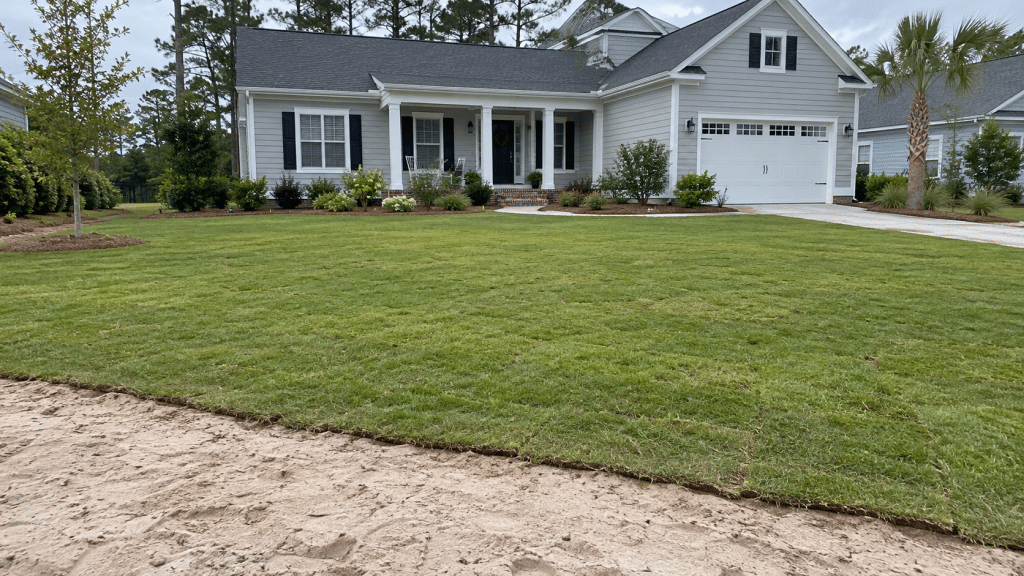
Sandy soil doesn’t have to stand between you and a healthy lawn. With the right grass variety, proper preparation, and a watering plan suited to your property, sod can establish successfully in sandy conditions.
The best sod for sandy soil depends on more than soil texture. Sunlight, climate, foot traffic, and access to irrigation all matter. For coastal properties, salt exposure adds another consideration.
Whether you’re planning a sunny front lawn or replacing grass in a partly shaded backyard, here’s what to know before choosing your sod.
Can You Lay Sod on Sandy Soil?
Yes, you can lay sod on sandy soil. However, the soil underneath the sod must support healthy root growth.
Sandy soils generally drain quickly and hold less water and fewer nutrients than soils with more clay or organic matter. That means a lawn can dry out sooner between waterings, and nutrients can move beyond the roots if watering and fertilization aren’t managed carefully.
Fresh sod provides immediate coverage, but it still needs to grow roots into the ground below. Preparing that ground before installation gives your lawn a stronger start.
What Is the Best Sod for Sandy Soil?
For many Southern lawns, Bermuda and Zoysia are strong options for sandy soil, particularly where sunlight and drainage suit their growing needs.
| Factor | TifTuf Bermuda | Zeon Zoysia |
|---|---|---|
| Best fit | Sunny lawns and active outdoor spaces | Lawns needing a balance of sun and some shade tolerance |
| Sunlight | Best in full sun | Tolerates partial shade, subject to adequate light |
| Drought tolerance | Excellent once established | Good, but depends on conditions and maintenance |
| Wear and recovery | Strong wear tolerance and relatively fast recovery | Dense turf with good wear tolerance; slower recovery than Bermuda |
| Key consideration | Performs poorly in heavy shade | Slower establishment and recovery |
* These are general comparisons; exact performance depends on the site and maintenance.
TifTuf Bermuda for Sunny and Active Lawns
For a sandy lawn with abundant direct sunlight, TifTuf Bermuda is worth considering. Its drought tolerance and ability to recover from wear make it a useful option for sunny residential lawns where outdoor activity is part of everyday life.
Drought tolerance becomes especially helpful once the lawn is established. Newly installed TifTuf still needs consistent moisture while its roots develop, particularly in fast-draining soil.
Zeon Zoysia for Full Sun and Some Partial Shade
If your sandy lawn includes partly shaded areas, Zeon Zoysia may be a better fit to evaluate. Zeon offers a fine texture and tolerates partial shade, with NG Turf recommending approximately four to six hours of direct sunlight per day.
Before choosing a variety, observe how sunlight moves across your property. A backyard that gets several hours of direct sun has different growing conditions from one shaded most of the day by trees or buildings.
Shade tolerance has limits. Where sunlight is too limited for healthy grass growth, a planting bed, mulch, or another landscape option may be more practical.
Choosing Sod for Sandy Soil Near the Coast
A sandy coastal lawn requires a closer look at salt exposure.
Salt can reach a lawn through ocean spray, saltwater flooding, intrusion into groundwater, or irrigation water. These are different sources of stress, and proximity to a beach or waterway doesn’t tell the whole story.
Before choosing sod for a coastal property, consider:
-
Does the lawn receive direct salt spray?
-
Has the property experienced saltwater flooding?
-
Does irrigation come from a well that could contain elevated salts?
-
Does water drain freely, or does it remain near the surface?
-
How much direct sunlight reaches each part of the yard?
Bermuda and zoysia can tolerate some salinity, but neither should be treated as immune to salt damage. Where substantial salt exposure is suspected, ask your local Extension office about testing soil and irrigation water before ordering sod. A standard soil fertility test may not include salinity testing unless requested.
The goal is to choose grass for the conditions on your property, rather than relying on a general “beach lawn” recommendation.
What If the Front Yard Is Sunny and the Backyard Is Shaded?
Evaluate the whole property before automatically choosing two different grasses.
For example, a sunny front yard and a partly shaded backyard may both be suitable for Zeon Zoysia if the backyard receives enough direct sunlight. That could allow you to maintain a consistent appearance throughout the lawn.
Alternatively, TifTuf Bermuda may suit a sunny, active front lawn while another variety better fits a separate backyard.
These are starting points for a recommendation. Actual sunlight, regional climate, soil conditions, and maintenance expectations should guide the final choice. NG Turf can help you compare the options before you order.
How to Prepare Sandy Soil for Sod
Good preparation helps roots move from the sod into the soil below.
- Start With a Soil Test
Test the soil before installation so you can address pH and nutrient needs. Follow the results when selecting amendments, fertilizer, or lime instead of applying products by guesswork.
If you suspect salt exposure, tell the testing laboratory so it can recommend the appropriate additional analysis.
- Address Weeds and Drainage
Remove existing weeds, unwanted grass, rocks, and construction debris. Correct grading problems and investigate areas that hold water.
Even a sandy property can have drainage problems caused by compacted layers, a high water table, or the way the lot is graded.
- Evaluate Organic Matter Needs
Well-decomposed organic matter, such as suitable compost, can improve the water- and nutrient-holding capacity of sandy soil. Where recommended based on soil conditions, incorporate it evenly into the existing soil before installation rather than leaving a separate layer beneath the sod.
- Create a Smooth Planting Surface
Prepare a smooth, firm surface that allows the sod to make close contact with the ground. Account for the thickness of the sod along sidewalks, driveways, and other edges. Good soil contact helps reduce drying and supports rooting.
Watering New Sod on Sandy Soil
New sod needs a different watering approach from an established lawn.
During establishment, keep the sod and underlying soil consistently moist without leaving the area saturated. Sandy soil can dry quickly, so check conditions beneath the sod rather than judging by the appearance of the grass alone.
To check moisture, gently lift a corner of a sod piece and feel the soil underneath. It should feel damp, without standing water or a muddy texture. If it feels dry, water and check again to confirm moisture has reached the soil below. As roots begin anchoring the sod and it becomes harder to lift, gradually water less often but for longer periods, checking soil moisture to avoid letting the developing roots dry out.
As roots develop, gradually adjust watering to encourage moisture deeper in the root zone. Follow installation guidance for your variety and account for rainfall, temperature, wind, and local watering rules.
Avoid setting the same irrigation schedule for every part of the yard. A sunny, exposed front lawn may dry faster than a sheltered, partly shaded backyard.
Caring for an Established Lawn on Sandy Soil
Once the sod has rooted, adjust maintenance to support steady growth:
-
Water according to need. Check soil moisture and lawn conditions instead of relying solely on a fixed schedule.
-
Fertilize appropriately. Follow recommendations for your grass variety, soil test results, and local requirements.
-
Maintain the recommended mowing height. Use guidance specific to your variety.
-
Watch for uneven performance. Thin areas may point to shade, irrigation coverage, drainage, or other site conditions that need attention.
Sandy soil can support a healthy lawn, but choosing the right grass is only the first step. Preparation and ongoing care help that grass perform as intended.
Frequently Asked Questions About Sod for Sandy Soil
Q: Do I need to add topsoil before laying sod on sandy soil?
Not always. Sandy soil can support sod, but its condition should be evaluated before installation. Soil testing and site preparation will help determine whether compost, suitable topsoil, or other amendments are needed.
Q: How often should I water new sod on sandy soil?
Check it frequently during establishment because sandy soil can dry quickly. Keep the sod and underlying soil moist without leaving them saturated, then gradually adjust watering as roots develop. Follow guidance for your variety and local conditions.
Q: Is sandy soil near the coast always salty?
No. Sandy soil does not automatically mean high salt levels. Salt exposure depends on factors such as ocean spray, flooding, and irrigation water. If you suspect a problem, request salinity testing before selecting sod.

Find the Right Sod for Your Sandy Soil
Planning a lawn on sandy soil? NG Turf’s Certified Turf Professionals can help you compare varieties based on your location, sunlight, soil conditions, and how you use your yard.
Explore TifTuf Bermuda and Zeon Zoysia, or contact NG Turf to discuss your project and find the right sod for your property.
Call 770-832-8608 to get started.